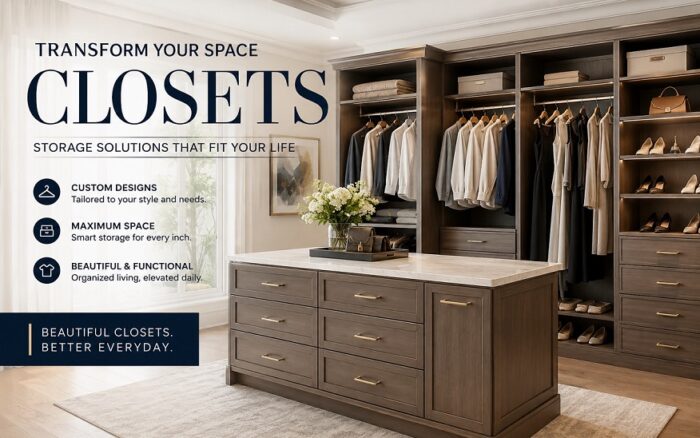
A cluttered closet can make even the most spacious home feel chaotic and overwhelming. Whether you’re dealing with a small reach-in wardrobe or a sprawling walk-in closet, the right organization strategy can completely transform how you start and end each day. Investing in storage systems for closets is one of the smartest home improvement decisions you can make — it saves time, reduces stress, and maximizes every square inch of available space. From modular shelving to custom-built solutions, modern closet organization has evolved into a blend of function and design that suits every lifestyle and budget.
Why Closet Organization Matters More Than You Think
Most people underestimate how much a disorganized closet impacts their daily routine. When you can’t find what you need quickly, mornings become stressful, clothes get damaged from improper storage, and you end up buying duplicates of things you already own. A well-organized closet, on the other hand, creates a sense of calm and control that ripples through your entire home.
It also protects your clothing investment — garments hung properly, stored in the right conditions, and kept free from clutter tend to last significantly longer. The mental and physical benefits of closet organization are real, and they begin the moment you commit to a system that actually works for your lifestyle.
Modular Shelving: The Backbone of Any Closet System
Modular shelving is the foundation upon which most effective closet systems are built. Unlike fixed shelves, modular units can be rearranged, expanded, or reconfigured as your storage needs evolve over time. Brands like IKEA’s PAX system, Bestar, and ClosetMaid offer flexible configurations that include shelves, hanging rails, and drawer inserts — all designed to fit together seamlessly.
The key advantage of modular shelving is adaptability; you can start small with a basic setup and add components gradually without replacing the entire system. For maximum efficiency, combine open shelves for folded clothing with enclosed cabinet spaces for items you prefer to keep hidden. Adjustable shelf heights are particularly valuable because they let you customize compartments for everything from bulky sweaters to neatly stacked shoes.
Custom Closet Systems: A Long-Term Investment in Your Home
For homeowners who want a truly tailored solution, custom closet systems represent the gold standard. Companies like Closet World have been designing personalized closet systems since 1991, offering everything from reach-in configurations to elaborate walk-in designs with premium finishes. Custom systems are engineered to use every available inch of your specific space — corners, awkward angles, high ceilings, and odd dimensions are all accounted for.
While the upfront cost is higher than DIY alternatives, the long-term value is undeniable: a well-designed custom closet adds to your home’s resale value and delivers years of functional, beautiful storage. You can choose from a variety of materials, finishes, and hardware styles to ensure the closet complements your bedroom’s overall aesthetic. Soft-close drawers, pull-out shoe racks, velvet-lined jewelry trays, and built-in lighting are just a few of the premium features available in custom builds.
Smart Hanging Solutions to Double Your Space
Hanging storage is often the most underutilized zone in a closet, yet it holds tremendous potential when approached strategically. Slim velvet hangers are a game-changer — they reduce bulk by up to 50% compared to plastic hangers and prevent clothes from slipping off. Multi-tier hangers allow you to stack trousers, skirts, or scarves vertically on a single hook, effectively multiplying your rail capacity without adding any hardware.
For closets with high ceilings, consider installing a second hanging rod below the main rail — this doubles your hanging space for shorter items like shirts, blazers, and folded trousers. Over-the-door organizers are another clever addition, turning the back of your closet door into a functional storage zone for shoes, accessories, or cleaning supplies. The goal with hanging solutions is to create visual layers that make everything accessible at a glance, rather than buried behind other items.
Drawer Organizers and Dividers for Everyday Essentials
Drawers without internal organization quickly become black holes where socks, belts, and accessories disappear forever. Drawer dividers and organizers restore order by creating dedicated compartments for each category of item. Clear acrylic organizers are particularly popular because they let you see exactly what’s inside without pulling everything out.
Felt-lined dividers are ideal for delicate items like jewelry, watches, and sunglasses, preventing scratches and tangles. For those who lack built-in drawers, standalone rolling drawer units can be added to any closet floor space and tucked neatly under hanging clothes. Labeling your drawers — even with simple handwritten tags — dramatically reduces the time spent searching for items and helps maintain organization over the long run. When every category has a designated home, the entire system becomes self-maintaining.
Shoe Storage Ideas That Keep Floors Clear
Shoes are arguably the most challenging items to store neatly, and an unruly pile of footwear on the closet floor is one of the most common sources of household clutter. The right storage systems for closets address shoe organization as a dedicated priority rather than an afterthought. Shoe racks and cubbies keep pairs visible and off the floor, while clear stackable shoe boxes protect your footwear and make it easy to identify each pair at a glance.
Slanted shoe shelves are space-efficient and display your collection beautifully, making it feel more like a boutique than a storage space. For boots, storing them upright using boot shapers or even repurposed cardboard tubes maintains their structure and prevents creasing. If floor space is limited, over-the-door shoe organizers or hanging shoe pockets mounted on the side wall can accommodate dozens of pairs without taking up any floor real estate.
Maximizing Vertical Space in Small Closets
Small closets don’t have to mean limited storage — the secret lies in thinking vertically. Most closets waste a significant amount of space near the ceiling, which can easily be converted into valuable storage with the addition of overhead shelves or bins. Items you don’t use daily, such as seasonal clothing, extra bedding, or rarely worn accessories, are perfect candidates for high shelving.
Fabric hanging organizers suspended from the main rod can be used to store folded clothes, handbags, or shoes in cascading pockets that take up zero floor space. Hooks and pegboards mounted on the interior walls or the back of the door turn flat surfaces into active storage zones for belts, scarves, hats, and bags. Even the sides of shelving units can be fitted with small hooks or magnetic strips to hold accessories. With the right vertical strategy, a small closet can store just as much as one twice its size.
Budget-Friendly Closet Storage That Actually Works
You don’t need an unlimited budget to create a beautifully organized closet — there are plenty of affordable solutions that deliver impressive results. Tension rods can be used to create additional hanging sections or to corral upright items like clutches and rolled scarves. Repurposed items like shoeboxes, wine crates, and wicker baskets make charming and practical storage containers for accessories, seasonal items, and miscellaneous small goods.
Command hooks are an inexpensive and damage-free way to add hanging storage anywhere inside your closet. Thrift stores and discount home goods retailers often carry shelf dividers, drawer inserts, and bins at a fraction of the retail price. The key to budget-friendly closet organization is to start by decluttering — removing everything you no longer wear or need — before spending a single rupee on storage products. Once you know exactly what you’re working with, you can make strategic, cost-effective purchases that genuinely solve your specific storage challenges.
Maintaining a Clutter-Free Closet Year-Round
Even the best storage systems for closets will eventually fall into disarray without a consistent maintenance routine. The most effective habit is a seasonal audit — ideally four times a year — where you assess every item in your closet and remove anything that no longer fits, needs repair, or hasn’t been worn in over a year.
The one-in, one-out rule is another powerful practice: every time you bring a new clothing item home, donate or discard an existing one to keep your total inventory stable. Keep a small donation bag or bin on the closet floor at all times so that items earmarked for removal are immediately removed from circulation rather than returned to the shelves.
Reorganize after laundry day by returning each item to its designated zone rather than simply tossing things onto the nearest shelf. A clutter-free closet is not a one-time achievement — it is an ongoing commitment to intentional living, and with the right systems in place, maintaining it becomes a simple, rewarding habit.