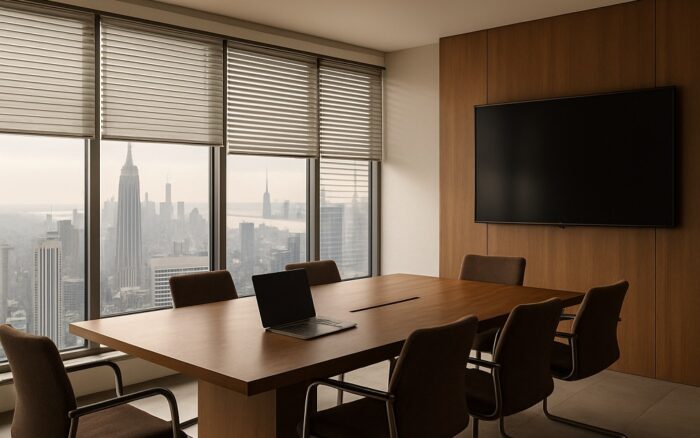
Choosing the right window treatments for a workplace is not just a design decision, it affects comfort, privacy, productivity, and how clients experience the space. Well selected blinds and shades can make an office feel calmer, sharper, and more intentional without complicating day to day operations.
If you are searching for office window blinds nyc, it usually means the space needs better light control, better privacy, or both. If you are searching for office window blinds nyc, it also often means you need a solution that looks professional, holds up to daily use, and fits within building rules and timelines.
Why offices in NYC need custom window treatments
NYC offices deal with a mix of challenges that residential spaces rarely face. Buildings sit closer together, windows run larger, and sunlight behaves differently when it reflects off glass towers and light colored facades.
Custom matters because commercial interiors are rarely standard. A conference room may need glare control for screens. A street facing office may need privacy without shutting out daylight. A reception area may need a clean look that supports branding without feeling sterile.
Light control that supports productivity
Glare is not just annoying, it disrupts focus. If teams squint through afternoon sun or keep lowering blinds and raising them again, the space never feels settled. Custom blinds and shades let you fine tune the amount of natural light so the office stays bright while screens remain usable.
In many workplaces, the best setup balances daylight with consistent control. That often means pairing the right material with the right openness level, then choosing an operating style that staff can use easily.
Privacy that still feels open
Privacy is a daily need in NYC offices, especially for street level spaces, medical offices, law firms, and shared work environments. The goal is not to block everything. The goal is to protect what needs protection while still letting in natural light.
A practical approach often uses solar shades or light filtering materials in open areas, and stronger privacy solutions in rooms where confidentiality matters. With the right fabric and placement, the space can feel open without feeling exposed.
Blinds vs shades for commercial interiors
Both blinds and shades work well in commercial projects, but they solve problems differently.
Blinds use slats, so they offer directional control. That makes them useful when teams want daylight but not direct sun. Shades use a continuous material, so they create a cleaner look and can reduce glare more evenly.
In a commercial interior, the decision usually comes down to these factors:
- Visual style and how clean the window line should look
- Glare control needs for screens and presentation walls
- Privacy level needed during business hours
- Ease of use for staff and facilities teams
- Durability and cleaning requirements
Wood faux wood and aluminum blinds for offices
Blinds still make sense in many office spaces because they are straightforward and familiar. They also offer flexible control through tilting and lifting.
Wood blinds for executive and client facing areas
Wood blinds bring warmth and texture, which can soften modern commercial interiors with a lot of glass, metal, and bright lighting. They often work best in private offices, conference rooms, and reception areas where the finish contributes to the impression of the space.
That said, real wood can require more care depending on humidity and cleaning practices. In many commercial environments, the look matters, but maintenance rules matter too.
Faux wood blinds for durability and consistency
Faux wood blinds fit offices that want the classic slatted look with easier maintenance. Many teams choose them for busy areas where durability matters, including staff zones, back offices, and multi tenant setups.
They also provide a consistent finish across multiple rooms, which matters when a project spans several suites or floors.
Aluminum blinds for functional high use spaces
Aluminum blinds remain popular for straightforward office environments because they are light, practical, and easy to wipe down. They work well in utility areas, storage rooms, and spaces where function comes first.
If the priority is a clean, professional baseline at scale, aluminum can still be the right move.
Shades that fit modern NYC offices
Shades have become the go to choice for many contemporary commercial interiors because they look clean and manage light well. When people talk about a polished, modern office, they often picture roller shades or solar shades.
Commercial spaces can be fitted with multiple shade types, including custom roller, cellular, and solar options.
Solar shades for glare control and daytime privacy
Solar shades help reduce glare while preserving outside views, which is ideal for offices with screens, open plans, and bright exposures. The openness factor and color choice do most of the work here, so selecting the right fabric matters more than people expect.
This is one of the most practical choices for NYC offices that want daylight but need predictable comfort throughout the day.
Roller shades for a clean architectural look
Roller shades suit offices that want minimal visual noise. They stack neatly, keep sightlines clean, and work well in meeting rooms and shared areas. They also pair well with motorization, which becomes important when windows are tall, hard to reach, or repeated across a floorplate.
Cellular shades for comfort and insulation
Cellular shades can help with thermal comfort, which becomes noticeable near big windows in winter and summer. In offices where perimeter desks sit near glass, that extra insulation can support a more consistent working environment.
They also offer strong light filtering and privacy options, depending on fabric selection.
Drapes and curtains in commercial design
Drapery may sound residential, but it plays a real role in commercial interiors when used intentionally. Soft treatments can reduce echo, elevate the space visually, and add comfort in executive suites, hospitality settings, and high end client areas.
In offices, drapery typically works best when it supports a specific goal, such as:
- Creating a more premium client experience in reception and conference rooms
- Softening acoustics in large spaces with hard finishes
- Adding layered light control when paired with shades
Motorized window treatments for commercial spaces
Motorization is no longer a luxury add on. In many NYC offices, it becomes the most sensible way to manage light consistently, especially in conference rooms, large window walls, and executive spaces where the window treatment must work every time.
Motorized blinds can operate through a wall switch, remote control, or mobile app, and can run on a schedule for consistent control. Motorized drapes can also be configured with premium motor options for smooth operation.
Smart control that keeps meeting rooms usable
A meeting room fails fast when glare hits a screen. Motorized shades solve this because anyone can adjust them quickly without touching cords or fighting with uneven rollers. Scheduled scenes also help offices maintain a consistent feel across the day, especially in client facing rooms.
Safety and cleanliness advantages
Cordless operation supports a cleaner look, reduces clutter, and can simplify cleaning and maintenance. In some commercial settings, it also aligns better with modern safety expectations.
Skylight shades for overhead windows
Skylights look great until the sun turns the room into a hot, bright box. Overhead windows create unique challenges because heat rises and access becomes difficult.
Skylights bring extra natural light but can make a room overly bright and hot, so skylight shades are often used to control comfort and glare.
In commercial interiors, skylight shades often make sense in:
- Atriums and lobby areas
- Stairwells with overhead daylight
- Top floor offices with angled glazing
- Creative studios that want daylight without harsh peaks
Commercial project planning that avoids surprises
Commercial window treatments go smoother when decisions happen early. In NYC, building coordination and installation logistics can add complexity, so planning matters.
Here is a practical checklist that helps teams avoid last minute rework:
- Confirm what each space needs: privacy, glare control, insulation, or purely aesthetics
- Identify window types: standard, oversized, corner glass, or skylights
- Decide on operation style: manual, cordless, or motorized
- Align finishes with the interior palette and brand feel
- Coordinate access and installation timing with building management
Choosing solutions by space type
Different areas of the same office usually need different treatments. A single product across the entire floor can work, but it is not always the most comfortable option.
Reception and client areas
Reception areas benefit from treatments that look clean and intentional. Roller shades, solar shades, and tailored drapery often fit here depending on the brand style. If the space faces the street, privacy becomes a top priority.
Conference rooms
Conference rooms need dependable glare control. Solar shades, room darkening roller shades, or motorized options tend to outperform basic blinds when screens are in use daily.
Open work areas
Open offices usually need balanced daylight without harsh glare. Solar shades often work well because they preserve brightness without turning the space into a cave.
Private offices
Private offices can take more design freedom. Wood or faux wood blinds can add warmth. Layering shades with drapery can create a premium look if the interior design supports it.
Key takeaways
- Match window treatments to the space, conference rooms need glare control, reception needs a strong visual impression.
- Choose between blinds and shades based on control style, blinds steer light, shades create a clean uniform look.
- Use motorization when windows repeat across a floor, sit out of reach, or need consistent meeting ready control.
- Plan early for access, building coordination, and the right fabric performance for NYC light conditions.
- Consider a full service provider that can support consultation, fabrication, and installation for smoother delivery.
What are the best office window blinds in NYC for conference rooms with screen glare
Light filtering roller shades and solar shades are commonly chosen for conference rooms because they reduce screen glare while still keeping the room comfortably bright. If the room needs presentations at any time of day, consider dual solutions such as a daytime solar fabric plus a blackout or room darkening option so the space can shift from daylight meetings to full screen visibility.
Do solar shades give privacy in an NYC office during the day and at night
Solar shades can provide daytime privacy, but privacy depends heavily on the openness factor, interior lighting, and exterior lighting conditions. Higher openness fabrics allow better views and more light but usually reduce privacy, and at night privacy can drop significantly when the office is brighter than outside.
How much do motorized window shades typically cost for a commercial office
Installed motorized window treatments are often priced per window, and many industry guides cite typical installed ranges around $300 to $1,000 per window depending on size, fabric, power source, and installation complexity. Costs can rise for premium systems, large custom windows, hardwired power, advanced controls, or higher end materials, so the best next step is usually an on site measure and a scope based quote.